Sport & performance / A practical guide
Red Head, Blue Head: How to Think Clearly Under Pressure

Red head, blue head is a model for noticing how pressure affects your thinking and bringing your attention back to the task. Developed by Ceri Evans and Renzie Hanham and used with the All Blacks, it gives people a shared language for a familiar problem: you know what to do, but in the moment you struggle to do it.
Perhaps you drop a pass and spend the next play arguing with yourself. Or a client questions your recommendation and you start defending a point they haven't actually challenged.
The useful question is: what will help you make the next decision well?
What red head and blue head mean
In Evans's explanation of the Red–Blue model, red describes our fast, feeling-led response; blue describes slower, deliberate thinking. When a situation feels threatening, the immediate reaction can crowd out the thinking we need.
That might look like rushing, going quiet, overexplaining, or staying stuck on a mistake. The signs differ between people. The examples below are prompts to notice your own response, rather than a test to classify yourself.
Red · fast reaction
Feel the pressure
Energy, emotion, immediate impressions.
A sign to notice: “I'm defending myself before I've heard the question.”
Blue · deliberate thinking
Choose a response
Perspective, attention, a considered next step.
A task to return to: “Find out which assumption they're questioning.”
Evans makes a distinction that gets lost in some retellings: we need red's energy as well as blue's clarity. His aim is an appropriate balance, which he describes as being “in the purple”.
You can be fired up and still make a good decision. You can feel nervous and still listen carefully. Treat these colours as a practical model for interacting responses, rather than two literal compartments in your brain or permanent personality types.
What the All Blacks changed
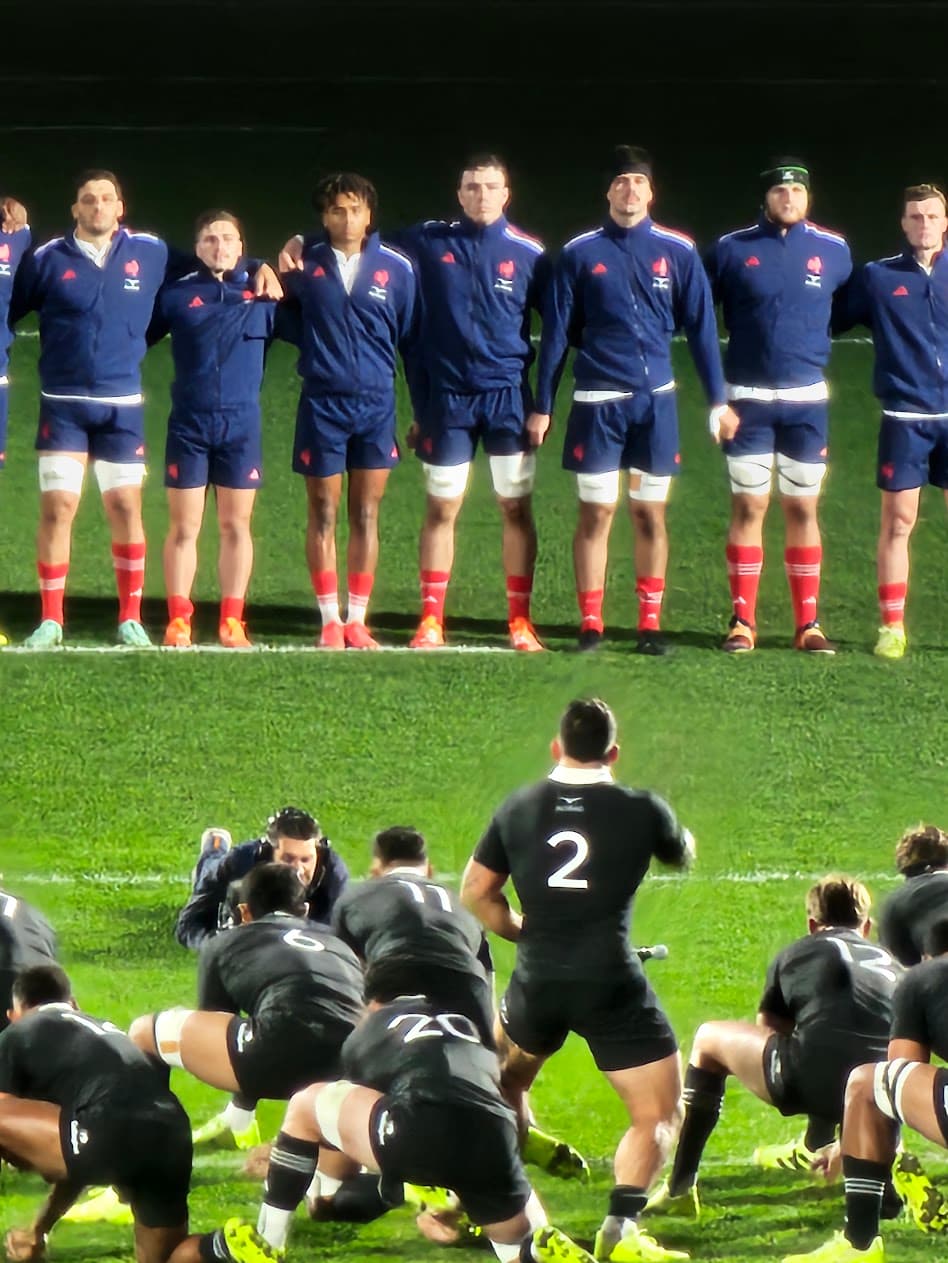
After New Zealand's quarter-final exit from the 2007 Rugby World Cup, Gilbert Enoka questioned his own contribution. In his interview with E-Tangata, he describes recognising that he didn't have answers to some of the team's hardest problems. He brought forensic psychiatrist Ceri Evans and mental skills practitioner Renzie Hanham into a small advisory group.
That's a more useful starting point than the idea that elite teams always know what to do. An experienced practitioner saw the limits of his approach and sought help.
Gazing co-founder Martin Fairn's account in Training Ground Guru describes work in the classroom, at training, and in matches. Players developed personal cues and rehearsed situations going wrong. Fairn points to Richie McCaw stamping his feet and Kieran Read looking around the stadium as reminders to redirect attention.
The physical gesture is the easy bit to copy. The preparation behind it is the part worth borrowing.
Fairn also declines to credit the approach alone for the team's World Cup wins. Mental preparation worked alongside technical, physical, and tactical preparation. A story about a winning team doesn't establish that one technique caused the result.
How to move from red head to blue head
Here's a way to turn that idea into preparation for an ordinary pressure situation. This sequence and the planner below are my application of the model, rather than an official All Blacks or Gazing exercise.
Notice your earliest useful warning
“I get stressed” is hard to act on. “I stop listening and start composing my defence” gives you something to catch.
Think back to one difficult moment. What happened just before your performance slipped? Your jaw tightened? You looked repeatedly at the score? You went silent even though you had a relevant question?
Choose one recognisable sign. You don't need to monitor every sensation while trying to do your job.
Choose a cue you can actually use
A cue is a short reminder to redirect attention. You might feel your feet on the ground, release your grip on a pen, take a deliberate breath, or say a short phrase to yourself.
Choose something that fits the situation. A presenter can pause at the end of a sentence. A player needs a cue that leaves them ready for the next phase. Copying a famous athlete's gesture adds little if it has no meaning for you.
Name the next useful action
This is where I'd put most of the effort. What should the cue bring you back to?
“Be confident” gives you another feeling to chase. “Ask which assumption concerns them” gives you an action. So does “find my defensive position and call to the player beside me”.
Choose an action you can carry out, even while uncomfortable. Then practise the link between the warning, the cue, and that action.
Build your pressure plan
Pick one upcoming situation. Keep the plan small enough to remember when your attention is stretched. If you're unsure what to write, view a completed example first.
From an idea to a rehearsal
Your next pressure moment
Fill in the six prompts. No sign-up needed. Entries stay in this form until you leave or reload; copy or download to keep them.
View a completed example
Illustrative examples, written for this guide.
- The situation
- A client questions the timeline halfway through my presentation.
- My first warning
- I want to interrupt and defend every detail before they've finished.
- My reset cue
- Put my pen down and let them finish.
- My next useful action
- Ask: Which part of the timeline concerns you most? Listen before replying.
- How I'll rehearse
- Ask a colleague to challenge the timeline in a run-through before the meeting.
- What I'll review
- Did I understand and address the actual concern, even if I still felt nervous?
One specific moment you're preparing for.
Something you'll recognise in your attention or behaviour.
A short reminder that fits the situation.
Something you can do, even while nervous.
Choose a realistic practice opportunity before the event.
An observable action to learn from afterwards.
Keep it short enough to remember. Rehearse the response, then revise what didn't help.
Save the plan somewhere you'll see it before the event. A paragraph buried in a notes app won't give you much of a reminder.
Two examples of a useful reset
These are illustrative situations, not reported accounts of players or clients.
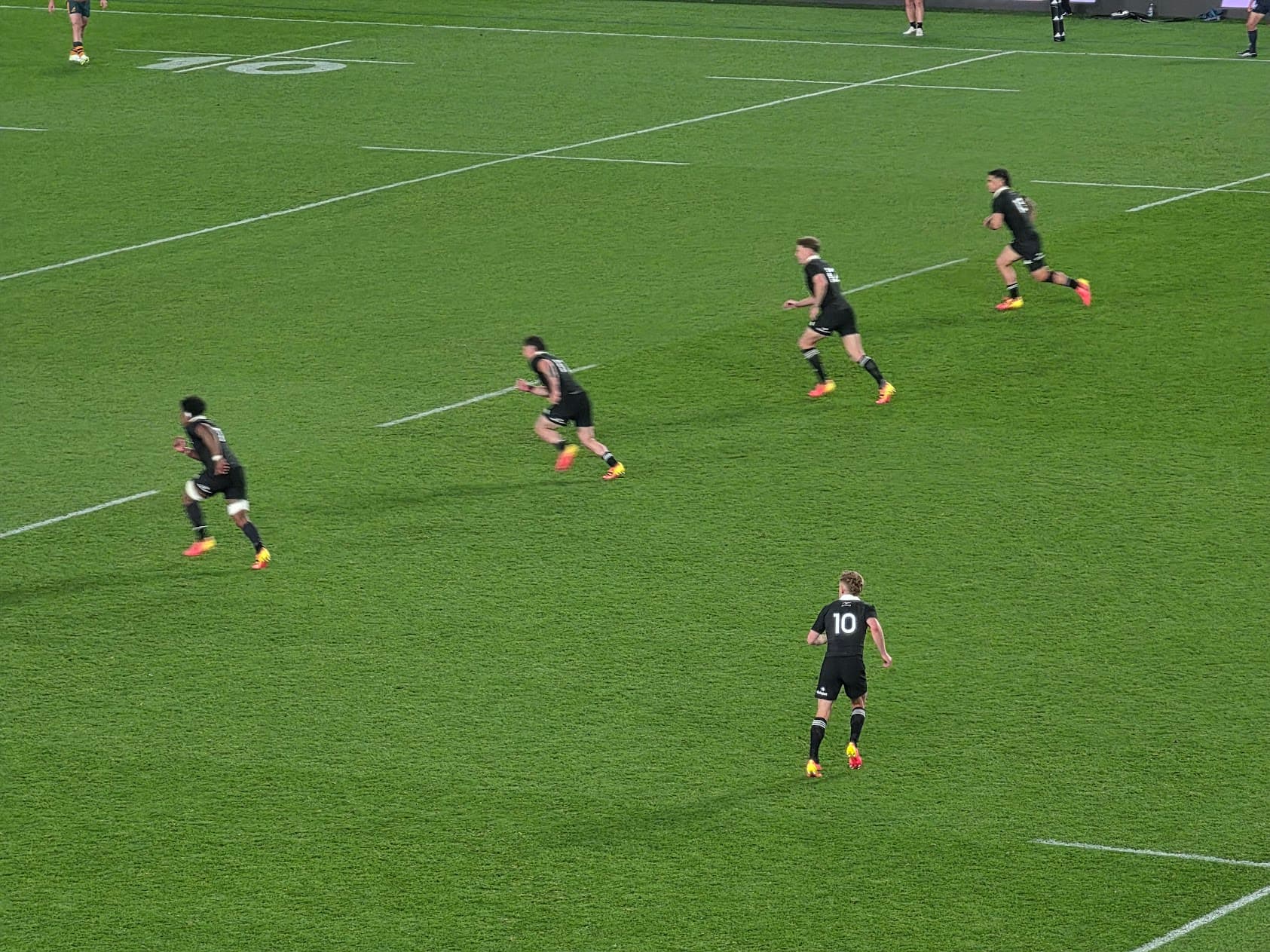
After a mistake in a match
A rugby player drops a pass. They replay the error, look towards the sideline, and miss information about the next phase. Their first warning is that glance towards the coach.
Their chosen cue is to feel their feet on the turf and say “next job”. The next action is specific: find their defensive position and communicate with the teammate beside them.
At training, the player and coach can agree to practise this response after an error in a suitable drill. The review question becomes: did they get back into position and communicate? That gives them something observable to improve, even if they still felt annoyed about the drop.
When a client challenges your recommendation
You're halfway through a presentation when the client says the proposed timeline looks unrealistic. You feel an urge to explain every hour in the estimate. Your speech speeds up and you interrupt their next sentence.
Your warning is the urge to answer before they've finished. Your cue is to put the pen down and let them finish. Your next action is to ask: “Which part of the timeline concerns you most?”
They may have spotted a real problem. Clear thinking includes being willing to change your recommendation.
Before the meeting, ask a colleague to raise a difficult objection in a run-through. Practise hearing the whole question, using your cue, and finding out what the objection means. Afterwards, review whether you understood and addressed the concern. Feeling perfectly composed is a less useful measure.
Practise before the difficult moment
Reading about a reset and recalling it under pressure are different tasks. Give yourself a chance to practise the response before the stakes are high.
For a presentation, start with a normal run-through. Then agree a realistic interruption with a colleague: an unclear assumption, a shorter time limit, or a question you cannot answer immediately. Rehearse responding without abandoning the purpose of the meeting. Increase the difficulty only when the exercise remains useful.
For a sports team, work with the coach to choose a drill that suits the players' skill and experience. Include a manageable setback and practise what comes next. Discuss the purpose beforehand; humiliating someone for a mistake teaches a different lesson from recovering attention after one.
After each rehearsal, ask:
- When did I notice my attention slipping?
- What did I do next?
- What would make the cue or action easier to use next time?
If the action was too vague, rewrite it. If the cue was easy to forget, try an earlier warning or a simpler reminder. Treat the plan as something to improve through use.
Give the team a shared language
The organisational lesson is bigger than a collection of personal tricks. A team can agree how it will respond when pressure starts to affect its work.
Before a difficult meeting or match, ask each other what a useful reminder would sound like. One person might welcome “what's the next job?” Another may prefer a factual question about the situation. Agree this while everyone has room to think.
During the event, a teammate can bring attention back to a decision: “What do we need to check before we commit?” Labelling someone “red” in front of the group can easily become another criticism to defend against.
Leaders have a part to play too. If a team is repeatedly overloaded because priorities conflict or decisions have no owner, address those conditions. A reset cue won't resolve the workload or choose the priority for you. My notes on how a leader's mood spreads through a team cover another way the environment affects people's work.
Questions that come up in practice
What if I freeze rather than get angry?
Look for your own warning: going silent, avoiding the ball, or failing to ask a question. Build the plan around that moment. The next action might be as small as saying, “I need a moment to check that.” You don't have to be visibly agitated to benefit from preparing a response.
What if I still feel nervous after the cue?
Check whether you can do the next useful thing. If you listened, checked the information, or returned to your position, the cue may have served its purpose while the nerves remained. If you still can't act, simplify the task or ask for support rather than repeating the gesture indefinitely.
What if I forget the plan when I need it?
Rehearse it in an easier situation and put a brief reminder somewhere appropriate, such as the top of your meeting notes. You may also be choosing a warning that comes too late. Try noticing the urge to interrupt, rather than waiting until you've spent several minutes arguing.
Will this stop me choking under pressure?
It offers a way to prepare and review your response. It cannot guarantee an outcome. Skill, preparation, fatigue, the opposition, and the conditions still matter. A useful plan should help you identify a better next action; it cannot supply knowledge or technique you haven't developed.
Sources and where to go deeper
The history and model above draw on Enoka's first-person interview, Evans's explanation, and Fairn's account of the work with the All Blacks. The planner and worked examples are my interpretation for readers of Thinktank. They haven't been reviewed or endorsed by the All Blacks or the model's developers.
For Evans's fuller account, see his book Perform Under Pressure. Gazing's Red2Blue site explains its training approach.
For more lessons from sport, read 25 ideas from sports psychologist Bill Beswick or how Eliza McCartney structures her goals and training.
Before you leave, choose the moment you're preparing for. Write one warning, one cue, and one next action in the pressure planner. Then put a rehearsal in the diary.