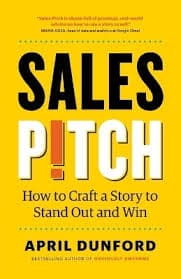
Sales Pitch
Summary and Key Themes
"Sales Pitch" by April Dunford provides insights into the complexities of purchasing decisions from the customer's perspective and emphasizes the importance of positioning and teaching in sales. I personally really enjoyed the way that the book helped you to understand thinking about just how hard things are to buy.
Here were the key themes in the book and after the key thems I've written out the main quotes that I found interesting.
Customer Perspective
- Understanding the difficulty customers face in making purchase decisions.
- Recognizing that customers often find the decision process overwhelming.
Positioning
- Positioning defines how your product is the best solution for a specific type of customer.
- It's not just about why customers should pick you, but why they should pick you over all other alternatives.
Considered Purchases
- Considered purchases require more time and effort due to potential negative consequences.
- Customers are more concerned about making the wrong choice than missing out.
- A considered purchase is anything over and above something you do automatically. It's something you have to think about.
Helping Customers
- Sellers should act as knowledgeable guides, helping customers navigate their options.
- Educating customers on the market and their choices can instill confidence in their decision-making.
Teaching
- Sales reps' teaching skills are crucial in creating a world-class sales experience.
- Buyers value sellers who help them make informed purchases by understanding their options and trade-offs.
Defense of Doing Nothing
- Sometimes, the best decision for a customer is to not make a decision.
- Between 40-60% of purchase processes end in no decision.
Understanding Competition
- Think of competition as different approaches to solving the problem rather than just other companies.
- Positioning against the buyer’s status quo is as important as differentiating from competitors.
Clear Next Steps
- Always have a clear next step in the sales process to keep the momentum going.
- Consistency in follow-up actions can help refine the sales approach.
Content Creation
- Creating a buyer’s guide can help prospects understand what they should consider when making a purchase.
- Visuals in sales decks can help position your offering and differentiate it from competitors.
Sales Pitch Format
- Introduction: Briefly introduce your company and product.
- Customer Perspective: Acknowledge the challenges customers face.
- Positioning: Explain how your product is the best solution for their problem.
- Market Education: Educate about the market and different approaches.
- Considered Purchases: Acknowledge risks and provide detailed information.
- Teach Through the Pitch: Guide the audience through their options.
- Differentiate from Competitors: Define competition as approaches to the problem.
- Clear Calls to Action: Ensure each section has a clear next step.
- Use Visuals: Incorporate visuals to illustrate key points.
- Create a Buyer’s Guide: Help prospects understand the purchasing process.
How hard things are to buy
The book is brilliant in that it forces you to see from the customers perspective. It's easy to get caught up in the excitement of selling a product and forget how difficult it is for the customer to make a decision.
Considering your product in the ecosystem of all possible solutions
Why considered purchase decisions are hard
Trying to buy a toilet
There is a great story in the book about trying to buy a toilet. It's a great example of how difficult it is to buy something that you know you need but don't know much about. Essentially there is 50 different toilets and you have to chooe, but then you don't actually know what you are looking for.
But then a toilet guide saves the day and provided an easy way for her to think about toilets and make a decision.
If you ask for a customers problems they might not know
In defence of doing nothing
This book helped me understand that sometimes the best decision is to do nothing. It's easy to get caught up in the excitement of selling a product and forget that sometimes the best decision is to simply not make one.
Help customers make an informed purchase by teaching them how to buy
This part of the book calls back to the toilet seller and how he helped her make a decision. This time it's up to you to help the customer navigate the landscape that they know very little about.